
Good Dog Labz
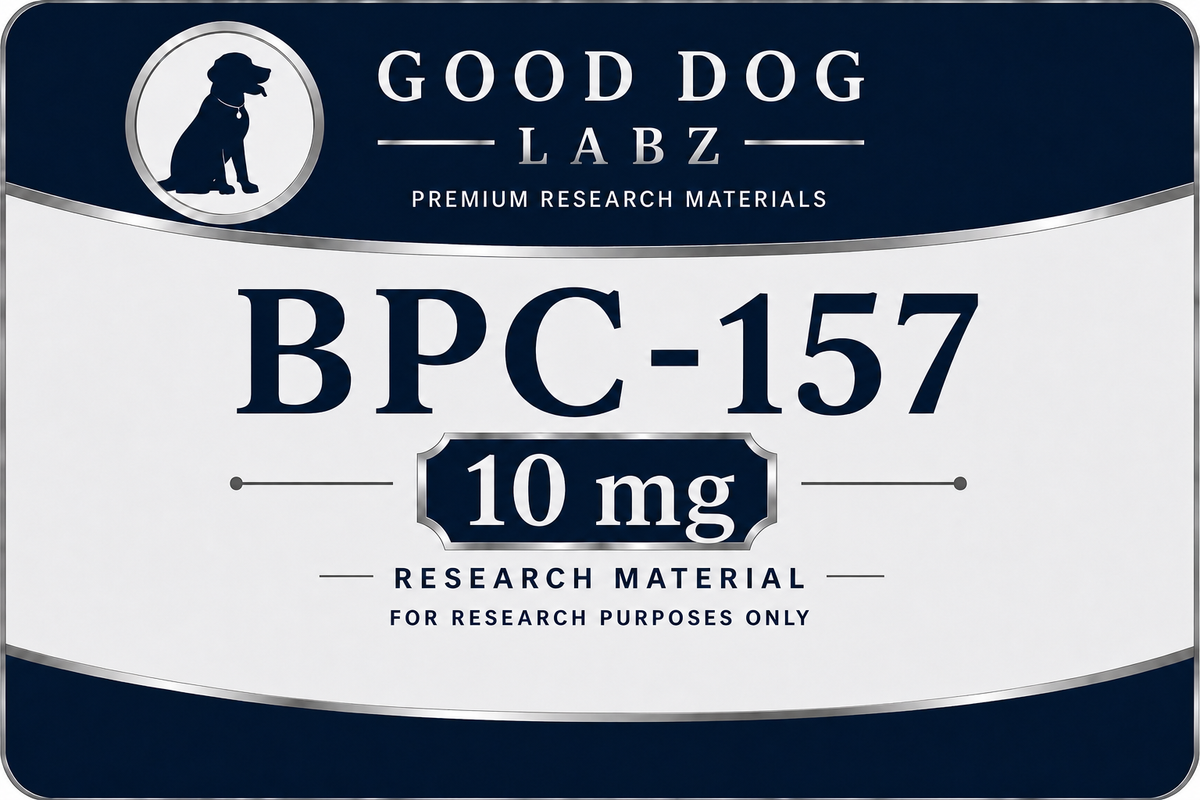
BPC-157 10 mg
BPC-157 10 mg
Couldn't load pickup availability
What Is BPC-157?
BPC-157 stands for Body Protection Compound-157. It’s a synthetic peptide made up of 15 amino acids, derived from a protein naturally found in the stomach. That’s where the “body protection” part comes from — it was originally studied for its role in protecting and repairing the gastrointestinal tract.
What makes it interesting isn’t just the gut connection. In animal research, BPC-157 has shown the ability to accelerate healing across multiple types of tissue: tendons, ligaments, muscles, nerves, and joints. It does this partly by promoting angiogenesis — the formation of new blood vessels — which brings more oxygen and nutrients to damaged areas. Most of the existing research comes from rodent studies. Clinical trials in dogs are limited. But the results from animal models are consistent enough that many integrative vets have started using it off-label, and anecdotal reports from dog owners are stacking up.
BPC-157 works by activating the body’s own repair pathways rather than suppressing symptoms the way NSAIDs do. That distinction matters. NSAIDs reduce inflammation by blocking certain enzymes, which helps with pain but doesn’t address the underlying tissue damage. BPC-157 goes a step further — it tries to actually fix the problem.
Here’s what the research shows it can do:
- Stimulate new blood vessel growth to injured areas (angiogenesis)
- Accelerate healing in tendons, ligaments, and connective tissue
- Reduce inflammation without suppressing immune function
- Protect nerve cells and support nerve regeneration
- Promote cartilage repair and joint tissue recover
BPC-157 for Dog Arthritis and Joint Pain
Arthritis is one of the most common reasons dog owners start looking into BPC-157. An estimated 20% of dogs over age one have some form of osteoarthritis — and in dogs over seven, that number climbs to over 65%. For large breeds like German Shepherds, Labradors, and Golden Retrievers, joint degeneration often starts earlier.
The standard treatment ladder goes something like this: start with joint supplements (glucosamine, chondroitin), add omega-3 fatty acids, move to NSAIDs when things get bad, then consider surgery or prescription pain management. It works for a lot of dogs. But not all of them.
BPC-157 is interesting in this context because it doesn’t just manage pain — it may actually help repair damaged cartilage and soft tissue. Early evidence suggests it can reduce joint inflammation, improve synovial fluid health, and support the tissue structures that hold joints together. For a dog with early-to-moderate arthritis, that’s potentially meaningful.
Some owners report visible improvement within 1-2 weeks: better willingness to climb stairs, less stiffness in the morning, more enthusiasm on walks. For chronic or severe arthritis, results tend to take longer — 4 to 6 weeks into a treatment cycle is when most people notice significant change.
Safety and Side Effects
BPC-157 has shown a strong safety profile in rodent studies — no toxicity at high doses, no immune suppression, no significant organ effects. In off-label veterinary use, dogs appear to tolerate it well. Reported side effects are rare and generally mild:
- Temporary lethargy
- Mild swelling or irritation at the injection site
- Occasional digestive upset (less common with injectable forms)
-
One area of caution: dogs with active cancer. Any peptide that promotes cell growth and blood vessel formation carries a theoretical risk of stimulating tumor growth. Until more research is done, most vets advise against using BPC-157 in dogs with known cancer. For dogs with that condition, KPV is recommended.
Share
Collapsible content
Can BPC-157 be used with other joint supplements?
Yes. It’s often used alongside glucosamine, chondroitin, omega-3s, and even NSAIDs. In some cases, dogs on BPC-157 may be able to reduce their NSAID dose over time — but don’t make that change without your vet’s input.
What conditions can BPC-157 help treat in dogs?
It’s primarily used for arthritis, joint pain, CCL tears, IVDD, post-surgical recovery, and GI issues like IBD or leaky gut. It may also support nerve regeneration and wound healing in dogs recovering from injury or illness.
Does BPC-157 need to be refrigerated?
Yes — injectable forms should be kept refrigerated to maintain potency. The peptide comes in lyophilized (freeze-dried) powder form and needs to be reconstituted before use.